Latest

Emotions Ran High! Sept. 26th 2013

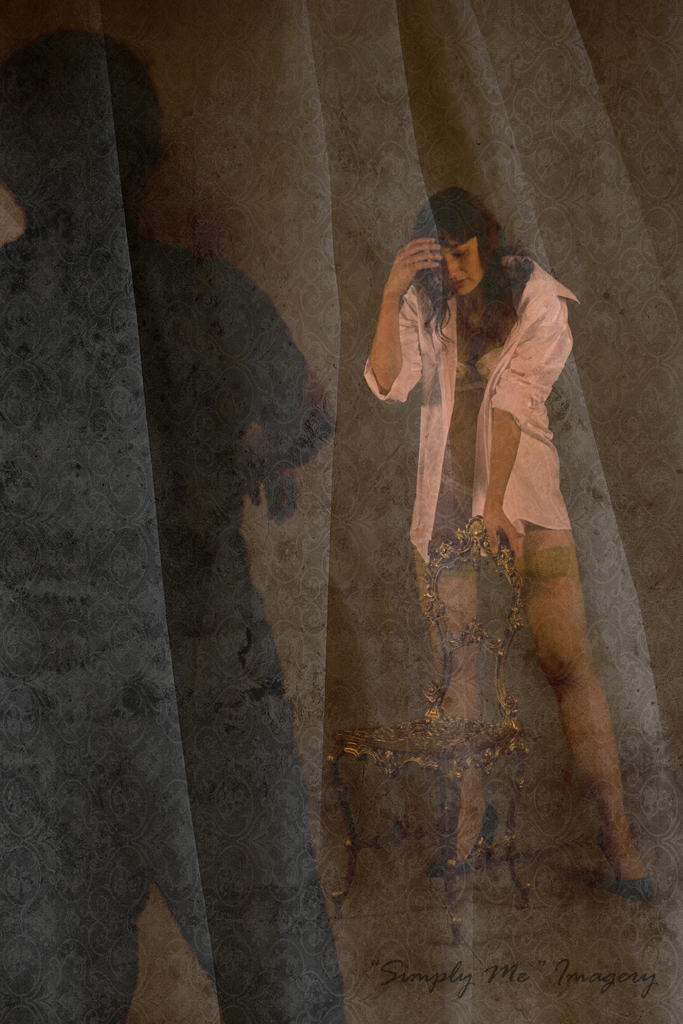
Jo Tabe_Untitled  Artistic handling of a studio shot by Jo Tabe

When the prearranged judge called in sick a couple of days before the competition, (hope you’re feeling better David!) emotions ran high as the committee debated what to do.  Should we swap with a Peer Review?  Should we have some form of Community Judging? Should we run around in circles like a chook with it’s head cut off?  The decision was not final until moments before the competition was to begin, when Alberto Giurelli, who had just signed up as a new member, (welcome Alberto!) kindly offered to be our judge for the evening.

The set subject of “Emotions” brought out some beautiful and engaging images, while the Open section was again well represented.  Alberto judged with enthusiasm and a refreshingly positive outlook, talking about what part of an image spoke to him, what he thought the author was probably trying to communicate as well as technical aspects that were either well handled or could use improvement.  He sprinkled his comments with welcome humour, survived being heckled by the crowd and overall helped to make the evening a positive experience for exhibitors.  There was an impressive range of images of a high standard and it was great to see a couple of members braving the competition when they have been more reticent in the past, and doing quite well. The fact that there were relatively fewer entries than usual meant there was more time to chat and enjoy the images when the judging was completed.

By the end of the evening I think the emotions were mostly happiness and relief, with no sign of the angst and confusion that had been trying to get a foothold earlier in the week.  Thank you to Chris (El ex-presidente) for handling the rearrangement of the evening (while new President Ashley had escaped to Singapore  😉 ) and to Alberto for filling the breach in a positive and generous manner.


To see the Top Scoring Images visit our Top Scoring Prints and Top Scoring Digital Images pages.

Helen Whitford 😉

BPC goes hunting for orchids! 8-Sep-2013

It is an amazing thing the Adelaide Hills orchids.  The tiny little flowers, no larger than your fingernail are intricate, precise and exquisite.  It is a special thing to find these small beauties.

This slideshow requires JavaScript.

My Uncle Bob had told me to look for orchids on the October long weekend.  But I have discovered that this gives only a small part of the whole picture.  There is a progression of species that starts in mid winter (July) and extends all the way through to early summer (December).  What you see depends upon what time of year you go looking.  First there are the helmet orchids and greenhoods and mosquito orchid followed by the yellow sun orchid, the waxlip and the donkeys, the spiders then the various blue salmon and white sun orchids and lastly the hyacinth orchid.  Thrown in amongst these are rarer species that I don’t see very often – bearded orchids, duck orchids and fire orchids.

So we planned this trip in early September.  What happened?  There was only a small group who met for this excursion.  Kim and Glori had photographed them in Western Australia.  Heather and Reg have been walking the trails of Belair national park and had a good idea where to look.  Mark and Jenny have been volunteer weeders in the park for a number of years and were also aware of where the orchids could be found.  Alan seemed to be quite familiar with them also.  Jo, although she didn’t attended this excursion, had driven along the Sheoak road boundary to photograph them a day or two previously.  You can see from the attached photographs what a wide selection we encountered.

Earlier on in the excursion Kim felt disappointed that we would see only 1 or 2 species.  Mostly the donkey orchids.  Heather however proved extremely valuable in adding to this number with a lot of discoveries.  I had to leave early.  As I departed, Alan arrived, adding further to the number of species encountered.  Kim and Glori had brought black and white backing screens to help isolate the flowers in the picture.  It is a funny thing seeing everyone getting down onto their haunches to train their macro lenses on the tiny flowers, a mere 5-10cms above the ground.  It is amazing how a tiny breeze comes out of nowhere and starts to move the flower around, just as you thought you had it focused. Although a small group, we were passionate and enthused and it was an enjoyable excursion for all.

James Allan

Ruminating on the peer review process

Its been an interesting time since we decided to implement the move from competition to peer review. Of course, these review nights have been a work in progress – rough around the edges, but slowly evolving into a night where club members can present an image and not be intimidated by a low score from a stranger. For newer club members, that’s even more important, and Ashley’s recent article in the SAPF Camera Club News (page 10 – One Easy Step) highlights the problems such a judge can cause for all of us.

The first question to ask is why do have peer review or even competitions? I suspect the answer lies somewhere between seeking praise from our peers and wanting to improve our skills.

Could it be that most photographers are all natural show offs? Its personally satisfying to share that little trick or image we’ve found and get a little praise. Its also the social aspect – like telling a story around a campfire and getting attention from your peers. It just makes you feel that little bit better. Regardless of the reason – constructive, positive comments work better than negative, destructive ones.

So here is a brief evaluation of the first half of the year and the peer review sessions (4 of them so far). I’ve included some images to entertain you too – examples of some of the experiments and images we’ve seen to date. See if you can work out what the photographer was playing at.

This slideshow requires JavaScript.

Firstly, there was the issue of how many images to display. We started out with rounds of prints then digitals – up to 3 rounds in all with 1 image per photographer in a round. To say I was a bit overwhelmed by the response on the night is an understatement. We had a lot of images! So refinement one will probably be that we go back a bit and have 2 rounds, but still with one image.

Secondly how to present the image. The photographer had to describe what they were trying to achieve. Timing could be an issue here – so we gave the photographer 1 minute to describe the image and what they were trying to do. The problem is that people find it hard to say that in 1 minute. Which statement helps the panel more? “I saw these brilliant flowers and took a photo” or “I saw these brilliant flowers in the foreground of this otherwise drab landscape and tried to show the contrast. Does this image work or can you suggest how to make it better?” Do you get the key words? “tried to show” “make it better“. That’s what we need to help the discussion along, otherwise the panel has to fish for an idea to help the photographer.

Thirdly, getting feedback. The panel – followed by the audience – would discuss the image, and the two panelists 1 minute, then the audience could have a go for up to 3 minutes. The problem? You can’t stop people talking. That’s both a good and bad thing.

Well at our first attempt, it its generated a lot of interest with people from other clubs attending the review nights to see how they work. It was a bit rough, and we ran over time. So what? We at least had some fun.  We wound up looking at everyone’s first round of images, and then rushing through the last ones. Lesson learnt – keep to time and don’t over do it.

The second observation was that the panel tried to help by saying “a judge would say……but I think…..“. There you go – judges again! Seriously, if we are going to get out of the standard photography club rut we need to discard what the judge says and move to what we feel and think. Don’t worry as much about the technical as the art. We can all improve the technical with practice, but the art comes from the photographers mind. The photographers thoughts are paramount. Everyone else is viewing what goes on in your mind.

That brings me to the third observation – telling the audience what the photographer is trying to achieve. For any review night, we need to help the panel formulate their thoughts. So we’ve encouraged exhibitors to say what they are trying to do, and how the panel & club can help. Not always successful – but I think we are starting to get there.

The next thing is number of images and timing. Two rounds seems to be enough, and timing, although important, is not paramount. Let the photographer have their say. Let the panel mull over the image. Let the audience chip in with comments. Its a conversation as much as a critique session. The only limit is really the imagination of the presenter and their peers.

When we first proposed this concept of peer review (and its not a new one) I was surprised by a number of contacts from outside the club asking if they could come along. My natural answer was “Yes – we’d love to have external input into our little experiment.” But maybe that’s the sort of club we are – outside the main stream and a little bit “bolshy“. It led to some interesting email discussions too – which were very stimulating intellectually and led to a lot more thought about the process we had begun.

What I have seen evolve over the last few months is less of the what the judge says (or would say) and more of the “I like it. I wouldn’t change it at all. I love the way you…….” or “Its pretty good, but I think if you cropped/reframed/coloured/desaturated/changed aperture/shifted shutter speed/removed noise (etc etc) in this it would work a little better“. The result – we’ve had members bring back their images after a suggestion and see if it worked better. We’ve had images entered in competition (or not). They are not all main stream photo club images either – that’s a nice change!

The other thing I’ve noticed is that unlike competition nights, the audience doesn’t fall asleep – the conversation keeps going. There is rarely silence (some folk can’t keep quiet). Everyone gets involved. I’d call that sort of engagement success. And importantly, you don’t see the muttering around the room afterwards about judges with no idea what they’re talking about.

So in conclusion, how is the experiment going? I’d say fairly well. Its not perfect, its evolving as I said at the start. We will get better. Importantly its a conversation between people in a club that shares a passion. Isn’t that what the club is supposed to be about? If it produces better images that a judge likes then that’s a bonus – but I’m personally pleased that’s not the aim.

Chris 😉
BPC goes Trainspotting : 21-Jul-2013

Trainspotting is a 1996 British black comedy about drug dealing directed by Danny Boyle based on the novel of the same name by Irvine Welsh.  I know this because it is one of my son Tom’s favourite movies.

This however was not the theme of our latest BPC excursion.  It was all about the trains.  More specifically a steam train, the 620 class steam locomotive – 621, The “Duke of Edinburgh“.  This is a 4-6-2 locomotive, one of 10 fast passenger engines originally intended for the Adelaide to Port Pirie “East-West” route.  4-6-2 refers to the arrangement of wheels, the middle number “6” referring to the number of large drive wheels that propel the train.  The first and last numbers refer to the smaller wheels fore and aft .

The Duke of Edinburgh was scheduled to leave Mt Barker at 10.00am to arrive at Strathalbyn by 11.00am and Goolwa by 12.00pm.  We arranged to meet at Mt Barker at 9:15 to witness the coupling of the train prior to departure.  This however was too early for some, who were concerned about road conditions.  There had been a pile up on the freeway the previous morning when it had iced over.  Regardless we had a good turnout with around 8 keen trainspotters, (and one that we acquired).  We befriended Nigel from the Edwardstown camera club who was out with his wife and nephew.

The magic of the steam trains is in all that steam.  The 140 ton steel monolith comes alive when it belches out steam from its various orifices and lurches backwards and forwards along the tracks.  No one failed to be captivated.  Just have a look at the photos.  Standing on the low ground we were enveloped in dense white steam as the “Duke” whistled then tugged it’s carriages out of the station up towards the Wistow highland.

We had a plan.  I had a map of the train line showing the location of the 11 level crossings between Mt Barker and Strathalbyn.  In our cars we drove ahead of the train and parked near a crossing in order to photograph it.  This was quite exhilarating and a lot of fun.  On a few occasions I arrived too late, seeing the train chug past as I was parking the car.  My fellow photographers however were nicely positioned and have excellent photographs.  At Strathalbyn we parted company.  Some drove home, others carried on chasing the train.  Ken unfortunately had to take his wife to hospital after she developed knee pain.

The photography was interesting.  With the stationary train at Mt Barker it took some discipline to step back and look at the scene more analytically.  Once I had a photo of the train at the station I needed to move around and look at new angles to improve the mood and the intensity of the subject matter.  However once the train started moving it was a different story.  Waiting at a crossing it was easy to get bored.  Finally as the train rounded the corner and first came into view I wanted to fire of a salvo of shots.  It was however too far away and as the train neared the focus was lost and it was easy to get blurred photos.  I felt like a fusilier in Zulu dawn.  There was a risk of shooting too early and missing the target entirely.  I needed a gunnery sergeant to tell me when to hold and when to fire.

Overall it was a well rated and enjoyable outing.  Fortunately the predicted bad weather came on later in the afternoon.

James Allan

“Lines” Competition August 1st 2013

Heather Connolly-Noarlunga Gold-set

We drew the line, followed the line, toed the line and tried not to cross the line as our efforts this month went before judge, Matt Makinson of Black & White Photographics.

Matt has worked as a professional photographer but has concentrated on the printing side of the business in recent years.  As a printer in commercial photography he brought a different perspective to judging, closely scrutinizing the quality of the print and picking up flaws such as colour casts, pixellation etc.

He also strongly encouraged us to make use of vignetting (but to keep it subtle) so that the eye is not drawn away to light corners of a photograph.  Like most judges he also pointed out distractions which could be removed to improve a picture, such as bright patches, marks from a dirty filter or objects cut off by the frame.

His commercial eye favoured an arty style and he suggested possible markets for a number of images such as Council brochures and magazines, as well as hanging on someone’s wall.  Heather did particularly well with some quite abstract images.  His dislike of flies and cacti may have cost Kerry a couple of points (bad luck, not bad photography Kerry!) but overall his remarks were encouraging and positive.

I think we all enjoyed his little anecdotes along the way, as well as his show and tell with a magnificent print of Uluru, which helped make it a pleasant evening.

To see the Top Scoring Images visit our Top Scoring Prints and Top Scoring Digital Images pages and scroll down to August.

Cheers

Helen : )