
Further to Chris’s post below, Jen Williams has written a review of the 31 Day challenge in camera clips. Have a look.
https://cameraclips05.wordpress.com/stop-press/31-day-challenge-2015-jen-williams/
Further to Chris’s post below, Jen Williams has written a review of the 31 Day challenge in camera clips. Have a look.
https://cameraclips05.wordpress.com/stop-press/31-day-challenge-2015-jen-williams/
Greetings from 2016! And Happy New Year!
Well – the 31 Day Challenge for December 2015 is over, and we had a fun time – at least I think we did. It was hard work finding a topic a day, but Judy, Bruce, Frances, David, Heather, Jen, James and I kept up the pace for the full 31 days. There were plenty of images from Kerry, Anne, Dana and even Matt (remember him?). Lots of photos (435 at last count) and lots of challenges for the participants. The list is just the ones that were posted on our Flickr page – there are lots of other images from each photographer in the mix you can explore.
Some interesting comments from our participants at the end put it in perspective (and a few of their photos):
Judy: “It has certainly stretched my photography. I learn from trial and error and there have certainly been lots of shots deleted but in the process I have got to know what my camera can do and my skills are steadily improving. I was fascinated to find so many insects in my garden. Most of them were feeding on different sections of the hollyhocks!”
Frances: “As we saw in the new year with friends I just wanted to say thanks for letting me participate in the 31 day challenge. I learnt heaps, from how to take photos, and how to mess them up, as well as the limitations of a compact camera compared to an SLR.”
Heather: “this is the life. It really has been a challenge, a great insight into contributors diversity and skills.”
Bruce: “Had a great month of playing photographer and scratching my head every day as to the next subject. I know I’ve increased my skills, maybe just a little, but it’s growth none the less. Thanks Flickr & thanks Blackwood Photographic Club for running this valuable December challenge.”
So here a few photos that I can access and embed:

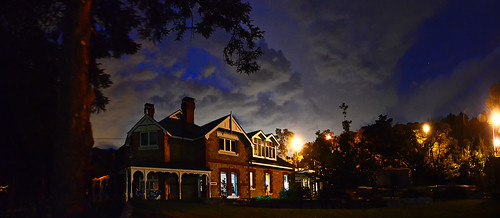
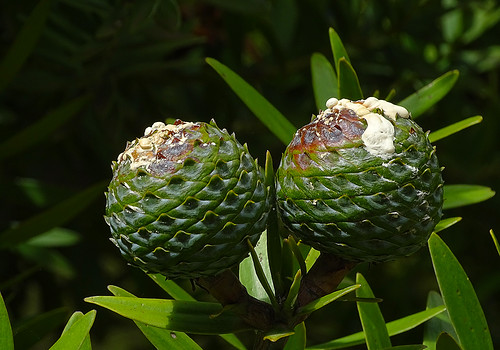
https://flic.kr/p/BRUFgj
You can view the whole group on Flickr in this search BPC 31 Day Challenge for 2015 . If you haven’t looked at the images yet, please have a look, comment on the images and see what your fellow BPC members have been up to.
Now for those of you wanting to try something longer term, how about a 52 week challenge? I came across this blog this week (there are others, but this one seems well structured). One photo a week with the core themes of Portraits, Landscapes or Artistic impression. The photographer suggesting it (Dale Foshe at Dogwood Photography in the US) has made the list for you. All you need to do is follow the list (which I’ll email out each week as well) and you can play along in the same way. Just post in the club Flickr group and tag the photo with “BPC 52 week challenge 2016” and we can see what comes of it. To participate in the world wide group, you should add the tags dogwood52 and dogwood <week number> (eg this is dogwood 1). Are you up for it? Can you produce a photo a week based on the nominated topic? This week it starts with a Self Portrait.
And a final reminder – the Coventry Library in Stirling is hosting the best of the best from our Annual Exhibition. Pop in and have a look – we have a very talented bunch, and after this years 31 Day Challenge, I think we’ll have lots of new faces in the 2016 Annual Exhibition!
Cheers
Chris 🙂
The annual exhibition is the culmination of the years calendar. Everyone brings their best work to display. This year was no exception. The judging was conducted at the Pedlars house a fortnight before. There were 3 judges, Gary Secombe, John Seidel and Renee Holmes.
On the night all of the images were displayed. There were so many images that we ran out of display room. The monochrome images needed to be laid out on tables at the back.
There was a presentation of awards. These were distributed among a wide cross section of the club. Apart from old names like Theo Prucha, Jenny Pedlar, Helen Whitford and Jo Tabe, awards went to newer members like Bruce Nankivell, Gloria Brumfield and Kerry Malec. Congratulations must however go to all the prize and award winners. Also I would like to acknowledge the work of all of the contributors – as the exhibition displayed the best of everyone’s work through out the year. I couldn’t help thinking that the standards are going up and we are all being stretched by the competition.
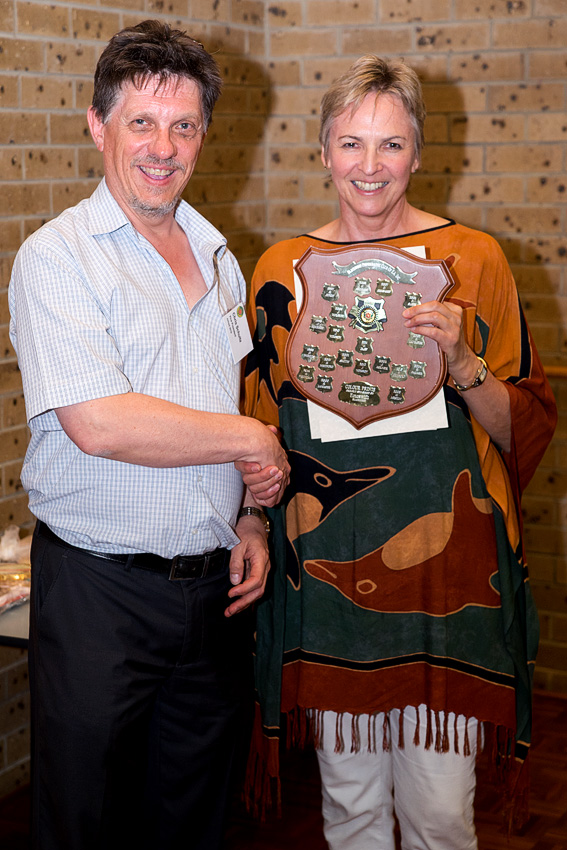
The winners of the major awards this year are as follows:
I must thank Ashley for taking images and making them available for this article. There was a lot of work that went on behind the scenes in preparation for the exhibition, including application forms, databases, collecting images, the judging, printing and displaying.
As well as the presentation of photographic achievement awards, the Bill Templar Award was given to Graham Field for his contribution to the club over the last year. Sometimes the hardest workers are not always most visible. This is true of Graham who works behind the scenes in his own quiet way. Graham has gone the extra mile repeatedly to help the club run smoothly.
In Camera Clips I have a companion article in which I set out a collection of the award winning images, the merits and most importantly the highest scoring image from each competitor. I have asked competitors to reflect on their best images and give feedback as to how it was taken and why it was entered. Be sure to have a read.
James
Last week BPC had the honour to listen to Chris Oaten speak to us about live music photography. Accompanied by his wife Melody (who provided the background commentary), we had a very entertaining evening that inspired a few of us to take up our camera at a live gig or two.
Chris is a media professional with over 20 years in the industry. Starting from a base of journalism (reporter, writer, sub-editor) he has followed his passion of photography to become a full time professional photographer, is a member of the AIPP and in his spare time photographs live music (I’m sure he does other things in his spare time!). He has extended his knowledge with a TAFE course in photography and is now doing a Bachelor of Visual Communications at UniSA. The night he spoke to us he was due to go to 2am shoot at a construction project. That’s a pro.
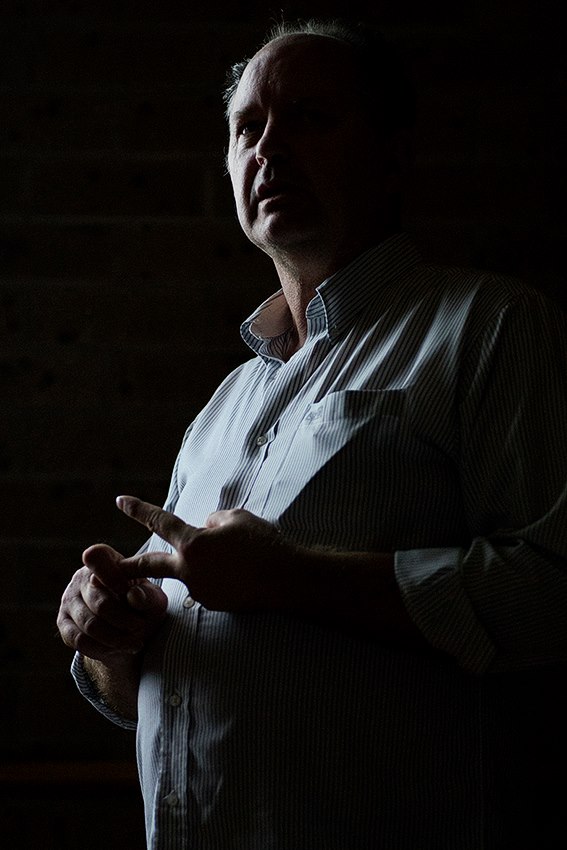
Chris Oaten at BPC (Ashley Hoff)
His range of professional work encompasses architecture, sport, travel, humans, commercial and time lapse images. He specialises in time lapse images around our fair city. To view the breadth of his work visit his website.
But as I said, in his spare time he likes to shoot live music with his trusty Canon 5D Mark III and some fast lenses (his range of lenses includes 24mm, 50mm, 70-200mm, 8-15mm, 16-35mm, tilt and shift 17, some Sigma Art lenses – you get the idea – but not all are used at music events). He does the music photography for professional development – not to make a living – which is near impossible these days. You can see some of Chris’s music photography on the Adelaide Music Photography web site he showcases his collaboration with Max Moore.
I’ve watched Chris in action around live music gigs – and to me it seems effortless and unobtrusive. In reality, there is more to it – and what follows is Chris’s take on how to shoot live music.
Chris started by giving a taste of the problems in photographing live music in pubs and has to deal with poor lighting (professional performers often have far better lighting and make the job easy – we were shown some images from a Tina Arena concert), crowded venues etc.
So what is Chris’s style? Get in close, use the lighting to your advantage and use selective (ie shallow DOF) focus, often manually.
Live music is action photography. Instruments are being used. So get profile shots, stick with the subject as the action unfolds.
Bad lighting can be your best friend – it makes you work harder. There is no such thing as bad light – only bad photographers. Chris showed several example of this with the band Lucky 7 at a gig where there was one light behind the artists. Instead of abandoning the shoot, he used the light to create profiles and silhouettes. Think of old horror movies and how they were lit – the images had great power and atmosphere. Do the same.
On the other hand, daylight music festival are a breeze – but you still need to work hard.
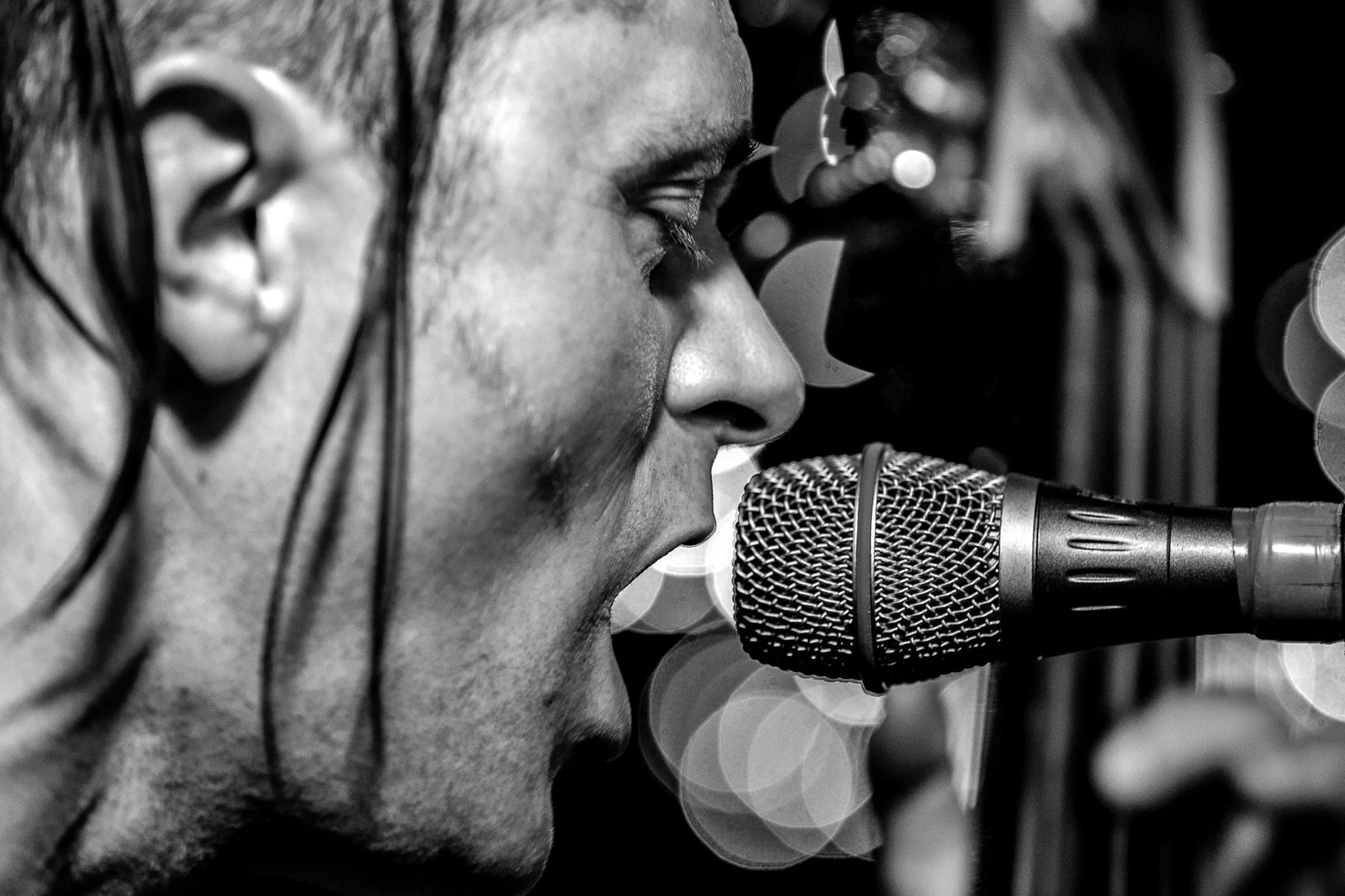
Steve Mitchell – by Chris Oaten
Change your position and angle of view. Use the stage equipment to help frame shots. Remember, the photo is telling a story so use the elements of that story. Chris showed us an example at the Semaphore music festival – which unfortunately for the organisers was held on a AFL Finals weekend. The crowd was a bit sparse, but by moving around the stage he was able to make it look busy (using the out of focus background and more crowd), show interesting on lookers, the artists in action from in front, behind and to the side as well eye contact with the artist to lend intimacy to the image.
He quoted photographer Berenice Abbott “photography helps people see” and illustrated this with some great shots:
It’s important to remember that good photographs are enhanced with details – they add depth. That means when taking photographs be observant. Some of the examples acutely demonstrate this:
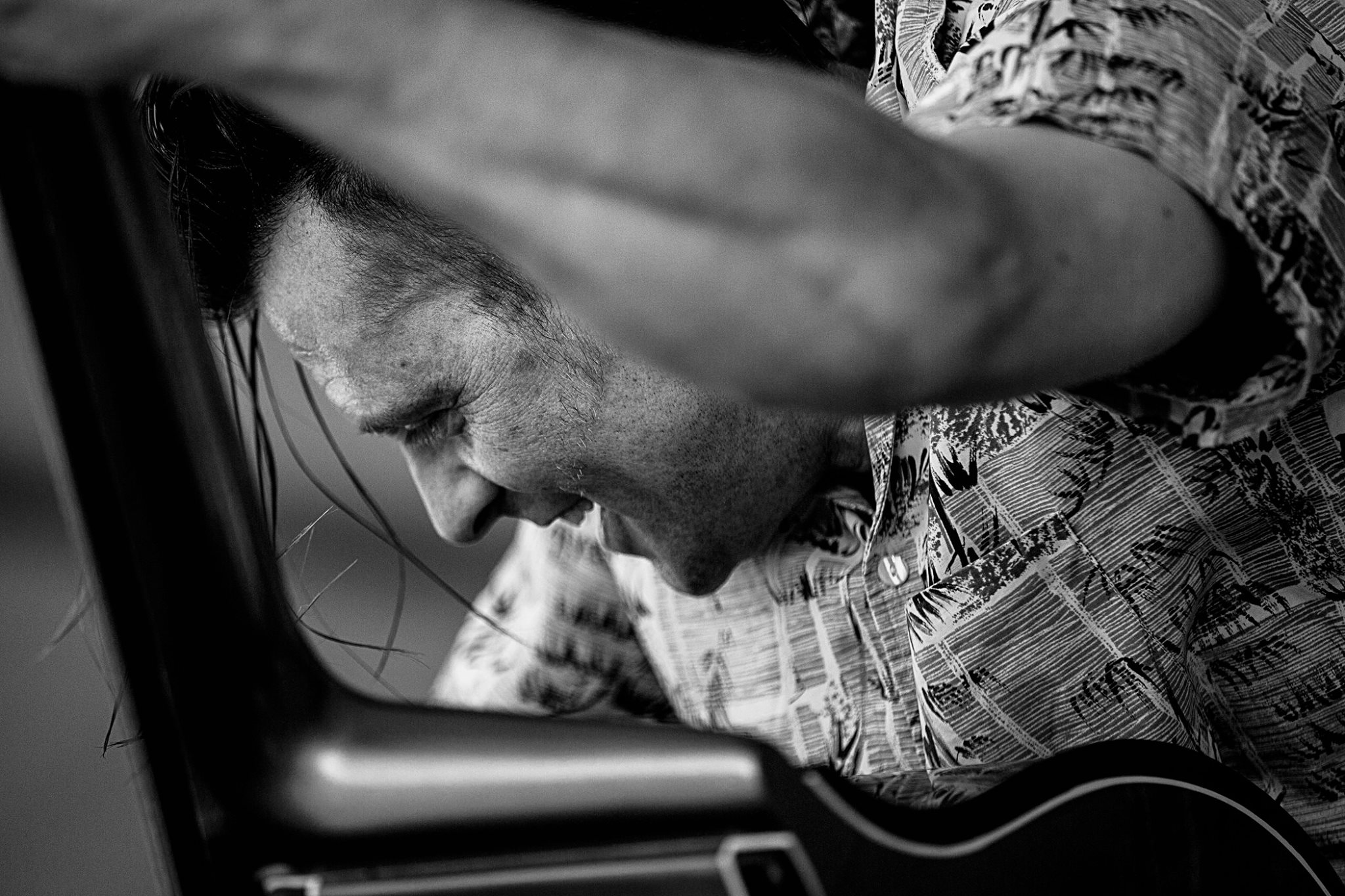
Steve Mitchell – by Chris Oaten
Steve Mitchell from the rockabilly band The Satellites has hair that starts out controlled, but very soon is part of the act
The trick here is to apply what you learn – don’t just be a technician. As Chris said, don’t just be a wood pusher in a chess game (ie know the moves but don’t develop new strategies). In photography, pixels are free, so don’t be a shutter pusher.
Flash does have a role in anti-establishment genres such as Punk and Ska. It is harsh lighting, but can work in such genres. However, at other times it rarely works well.
It’s often better to have off camera flash – and even combine flashes. Chris illustrated this with an image of lighting reflected from a white wall behind the performers onto which the flash fell – much more depth than a straight flash onto the performers.
If you must use flash, use a an orange or yellow gel to warm it (flash can look very cold) – don’t use green or blue. You need to be sympathetic to the available light too – don’t overwhelm the stage lights.
And use the lights to go for drama – like silhouettes or use the light to make more reflections – such as brass instruments.
You’ll need to do some testing of your own camera gear and work out it’s noise signature. What is acceptable and what you can tolerate. Chris rarely goes above 3200 on his Canon 5D Mark III.
Here are the steps:
If you are using high ISO, make sure you have fast lenses – f1.8, f2.8 etc – like his 70-200 f2.8
One simple solution is to purchase a 50mm f1.8 lens second hand – there are plenty about (I confess to having a nifty 50 f1.4 myself) – that will give you a lens that is fast and flexible.
ISO changes are needed depending on the speed of your subject – a Bob Dylan is ok with slow ISO, but Mick Jagger needs higher ISO and shutter speeds.
Now the tricky bit – professional events have good lighting – pubs have cheap lighting. Usually LEDs and that is hard to work with. So work with the light – use blur, have long exposures to add a dynamic element.
When photographing live music you need to know what is going on – understand the dynamics of the performance.
You first need to understand the genre. Once you’ve got that, then think about the parts of the performance.
There are verses and choruses. So you’ll have a group in a chorus, but the main performer in the verse, or a solo instrumental. Knowing how performers work and when they are likely to do something can help.
For example Steve from the Satellites (who is a double bass player) often has a big finale – time your shots for events like that. Lucky 7 have a horn section who will play together – use that.
Drummers are often left out of shots, but they do some interesting things (Chris has got know a couple and now interacts with them whilst shooting). Pick the player most likely to give you a performance.
But always be respectful of the performer. Don’t embarrass them.
You need to commit yourself to chase the right frame and for fast action.
Most performances are 2 hours – which is 7200 seconds. After most shows Chris has about 1000 shots in the camera. That’s about 1 shot every 7 seconds. But not every shot is a winner – and some shoots the band might be having a bad night, so getting good shots is difficult.
Many bands will be slow to start (or nervous) – so don’t shoot song 1 – wait for song 2 or 3. Be patient.
Chris never shoots with any supports like a monopod – all hand held. That is part of being respectful of the audience. They are there to hear the band or dance or both. So don’t get in their way.
Some gigs require a media pass – if the band is signed to a label or it is a major event like WOMAD (who are very restrictive). The Roller Derby in Adelaide has photographers sign their rights away. In some cases your copyright may be lost – but that is another major discussion!
Venues such as The Gov are accepting of photographers if it is a local band. However, to be safe, contact the venue or the band. Many local bands don’t mind – and if you share the images they might even get you back.
And remember a big camera can be seen as problem by some venues – even if you are an amateur.
So there you have it – a great night, lots of useful information and a really entertaining evening – finished off with cake, cups of hot beverage and lots of chat. Many thanks to Chris and Melody for sharing their experience – we hope to have Chris back as some stage to share his other photographic skills with us.
Cheers
Chris 🙂
The perennial dilemma of the modern photographer – should I photograph that bit of art I admire?
We are faced with this daily – from photographing sculpture, architecture, industrial design or paintings to painting someones photograph (now that’s one you hadn’t thought of!) or sculpture or industrial design or architecture.
There are also potential copyright issues. The simplest way to look at the problem is to consider if it is a derivative work and you’ve added something to it. So a photo of a sculpture needs to add something to it – a person examining it, some interesting light that makes it unique, the interaction of place, time and light. How about a photo of a hood ornament on a car? A teacup? Someone else’s photo of a tea cup?
Some places & countries even go to extremes and forbid commercial (and probably amateur) photography of buildings, panoramas etc without permission. A debate raged earlier this year as Europe tried to standardise the copyright of Freedom of Panorama (see this DP review article). Have a look at the Wikipedia page link above to see where you can take pictures safely. The conclusion was a defeat of the proposal – you can keep taking photos of the buildings of Europe (sort of).
But if you change or interpret the original, you are deriving something new. And that I think is the crux of the argument.
There are many discussion on the web about the topic (the World Intellectual Property Organisation – a part of the UN – has an interesting article applicable to photographers; the Creative Commons licence system; the US governments Copyright office definition of derivative work or the American Society of Media Photographers discussion) and we are adding to that in the latest Camera Clips, where the opinions of camera club judges, photographers and legal experts have been canvassed.
Have a read and form your own opinion.
Cheers
Chris 🙂




 Blackwood Photographic Club of South Australia Inc.