| A good roll-up of members attended the competition on Thursday night 18th August. The set subject matter was “Abstract”, and many members submitted set-subject entries. Judge for the evening was David Smith, an experienced and successful landscape photographer with many photographic awards and honours under his belt.
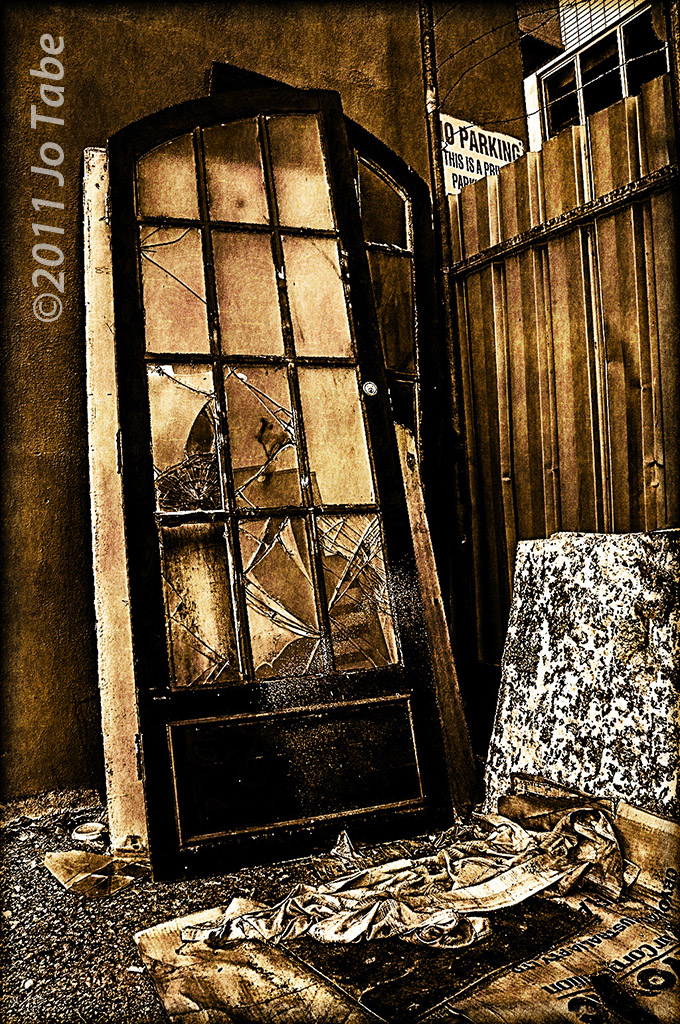
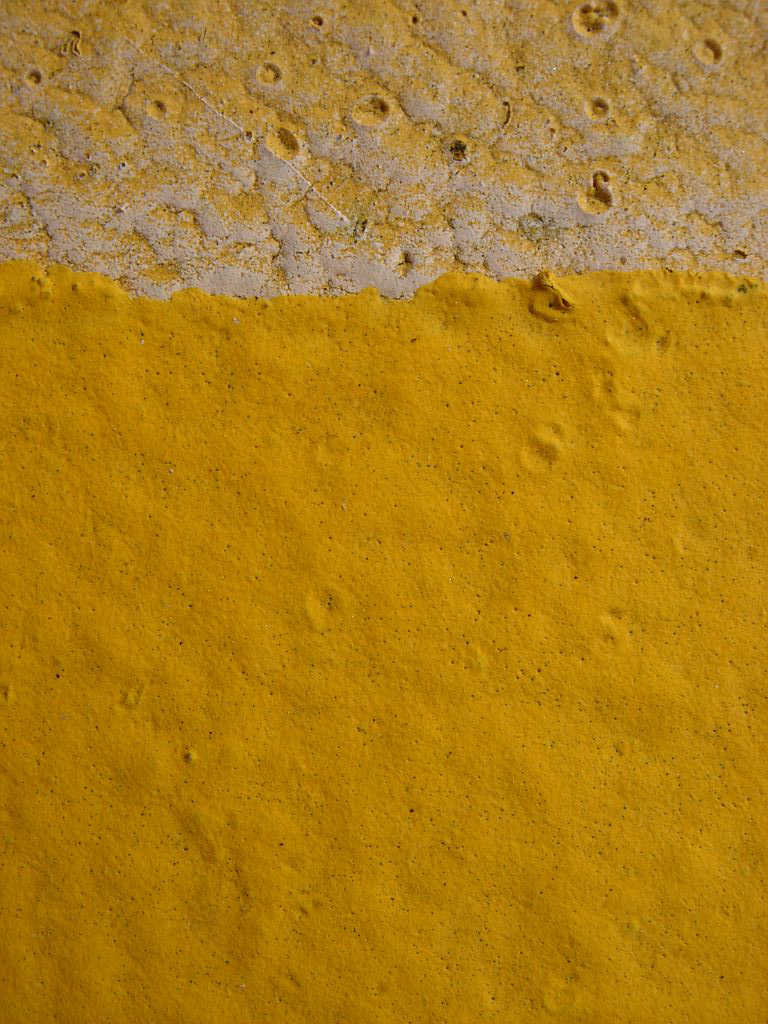
It would be fair to say the subject matter created some interpretation problems for both entrant members and the judge. How should “abstract” be judged? If it’s an abstract, well, it’s an abstract, so it’s then possible to claim that any image that successfully fell into the category would be worth 10 points as it has succeeded in being an abstraction. Here’s some definitions: “Separated from matter, practice or particular examples; not concrete; ideal, not practical; abstruse; .. the ideal or theoretical way of regarding things.” (The Concise Oxford Dictionary of Current English, 5th Edition 1966) “1. conceived apart from matter and from special cases 2. theoretical; not applied 3. of or pertaining to abstract art.. etc.” also “Abstract Art: a 20th century concept of art which rejects the function of art as portraying perceived reality; non-representational art.” (The Maquarie Concise Dictionary 2nd Edition 1995) Our own definition was: So, with expectations the judge is to award more points to images he/she interprets as “better” abstracts than others (otherwise no point to having a competition), some “normal” photograph elements could then apply to differentiate between images falling within the interpretation. Impact was certainly one of the elements used, presentation (print matt boards and digital projection borders) was another, and also composition. The result? Well, you can’t please everyone and David conducted his judging in accordance with his interpretation. This may not have pleased everyone, but in the final analysis judging was conducted expeditiously and members like myself were grateful for this. Judging which drags on creates boredom and David certainly kept the pace rolling. I feel that, if the club includes “Abstract” as a future set subject (and why not!), we should ensure the judge is well-instructed about the subject matter when first engaged to judge. As always, I feel any subject which puts members (and judges) outside their “comfort zone” is conducive to expanding our knowledge of photography as a fine art. Ray Goulter The Abstract competition digital high scorers are on the Digital Entries page – along with a collection of Editor’s Choices. Two of my favourites prints from the night are featured here. Chris 🙄 |
![]() |
![]() |
Latest
Abstract – 18-Aug-2011
Atkins Technicolour outing – 4-Aug-2011
A wet, miserable night was brightenned for many BPC members with a memorable outing to Atkins Technicolour on Fullarton Road. Paul Atkins showed us around his families excellent facilities, describing how Atkins had developed from a company producing images of horse race winners and aerial photographs to a colour processing laboratory to the current multimedia service.
We were shown the preview room, where photographers can check their images on colour calibrated equipment at no charge (but there is a time limit). As we wandered through the front of the premises, a fridge stocked with film got Matt and Ashley a bit excited – funny that.
Moving to the working areas we saw the locally built classic C41 dip and dunk film developer tank (with full manual control in the event of failure – a crank handle!). The smell of the chemicals brought back some fond memories for this little black duck :lol:. This was custom made for Atkins in 1970 and still works today, though with less frequency than in it heyday. A Danish Refrema dip and dunk E6 slide processor completes the film system, carefully tended by the highly experience John Clarke from Duckpond. As we moved through I noted a lovely poster size image of Venice – and immediately thought of Arthur…..those who know of Arthur’s frequent visit there will appreciate the comment.
In the printing/colour correction room Paul explained how printing with the Kodak Pegasus (Peggie) and a Noristu 3203 (Sue) allow silver halide prints to be produced efficiently in a range of sizes and formats. The colour correction for the images is, interestingly, performed by women. It seems that colour blindness issues and the skills required aren’t up to the mark in the male population.
As we left the printing room Paul pointed out the stacks of CDs and hard disks that stored all the images they had printed from digital. It was a reminder that digital storage technology is changing – and we need to have secure, backed up storage that will be readable in the future.
The lamination equipment demonstrated led to a discussion about printing on other media – with Paul telling us he is looking into a print system that can print on any shaped surface – including corrugated iron!
We also saw some fascinating equipment, including Atkins BetterLight slit scanner for reproducing fine art images. This device uses a 4″x5″ back on a view camera with a scanning slit of over 10000 pixels in a 72mm width that scans the image – producing over 100 megapixel images in either 8 or 16 bit colour. Time to throw out the dSLR I think. It certainly had Ray excited!
An examination of the large format Epson printers (which allows enormous prints to be produced) completed the review of printing equipment. This can work in 16 bit colour, and Epson claim a life expectancy for their prints of 200 years (theoretical of course – if anyone is around in 200 years we can check that!). The difference with inkjet printing is that light colours are generated by printing fewer dots on the white paper – a bit like newprint. Regardless of the method – it still looked good.
We finished back at reception with a look at the photobook business that Atkins now offers. This certainly looks like the way to go with digital images – rather than leaving them lying around on hard disks or CDs waiting to be lost.
So all in all, a great night. Many thanks to Paul for his time and sharing his wealth of knowledge. The visit was well worth the effort – it generated a lot of discussion afterwards (despite the rain). And don’t forget to check out Paul’s blog and the Atkins web site for more details.
Chris 😉
The Concept is Three – 21-Jul-2011
Three of a kind, something to do with three or just three in the image – that was the concept for the competition. Judge Des Berwick gave us brief, constructive & effective comments on the 36 set subject and 52 open subject images with high efficiency. A few new members, such as Hilary Thompson, added to the mix of 10s seen in the print section – well done Hilary!
You can check out the 9s and 10s (along with the Editor’s Choice) on the 2011 Digital Competition page
Chris 😉
BPC vs EPC Interclub – 7-Jul-2011
Last Thursday the Blackwood Photographic Club hosted the annual Interclub with Edwardstown Photography Club.
In all three formats – colour prints, monochrome prints and projected images it was a close match, but at the end of the night Edwardstown were victorious by a small margin.
The results were:
Mono Prints: Blackwood 97 Edwardstown 107
Colour Prints: Blackwood 111 Edwardstown 112
Projected: Blackwood 179 Edwardstown 189
Aggregate: Blackwood 387 Edwardstown 408
Congratulations to our 18 entrants in the competition. All BPC members submitting entries were represented. Overall the scores were good and everyone who took part should be proud of their contribution.
Our judge, Lou Marafioti, provided some amusing quips throughout the night and also offered what he felt were constructive comments and suggestions. We will never agree with everything a judge says, but overall it was quite enjoyable.
Edwardstown was represented by a small number from their club who braved a very cold and bleak winter’s night to join us.
Thanks to those Blackwood members who provided a wonderful selection for supper. A hot cuppa and something tasty to eat was a fitting end to the night.
We look forward to next year’s event, so start thinking about what you can contribute. The committee may tap you on the shoulder at meetings in the coming months to suggest you submit one of your images for the Interclub. Don’t be bashful, if someone else likes your image, have a go.
And for those that missed the night – the slideshow below shows you all of the BPC projected images entries!
Julie Goulter
Secretary Blackwood Photographic Club
Smaller than a breadbox competition – 23-Jun-2011
Interesting title – and some interesting close-up and macro images tested our judge as a result. There were 42 prints and 34 digital images to judge – some simple, and some cleverly creative. Once again, Jo Tabe scored a bunch of 10s – with some potentially scoring an 11 (our judges words!) – particularly that print of the mouse in the bread box you can see here! 😆 Never-the-less a few of member such as Helen Whitford are keeping close. Overall, there were quite a few high scores in the prints from many club members. We are certainly good at close up work!
Our judge Peter Mastrenko gave detailed and constructive comments and reminded us that light was our best friend – or not!
Please check out the Digital Entries page for our projected images 9s and 10s in both the Set and Open categories – along with a few editor’s choice of course!
Chris 😉