Members embraced the Set Subject and challenged themselves to try something new with some brilliant results in our Triptych competition on Thursday night. Judge Susie Lipert took a gentle approach, clearly putting herself in the place of the photographer while she gave constructive comments, talked about what did and didn’t work and gave helpful hints on how images could have been improved. Her comments were broad ranging – very specific to the image and I think her efforts were appreciated by all.
There was a really interesting range of subjects and some people had clearly taken photographs specifically for triptychs.
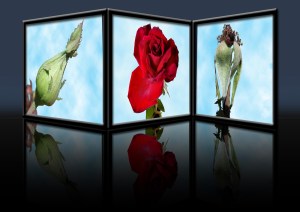
Eric was very creative…..
Eric Budworth – Life Span
James thought outside the square…..
James Allan – Cogs
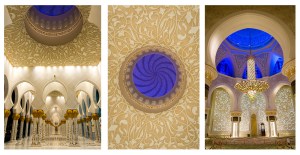
Tariq showed off beautiful details…..
Tasriq Mohammad Abdul – Place of Worship
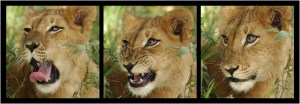
and Helen still couldn’t resist focusing on furry animals!
Helen Whitford – The Three Faces of Moyo
And in Open, James captured a Variable Sunbird in all its shimmering glory!
James Allan – Variable Sunbird – Open
To see more images from the night visit the Top Prints and Top Projected Images which includes a number of extra Editor’s Choices.
Hopefully this Set Subject may have opened minds to the use of triptychs in other competitions as a triptych is great for storytelling and can be used very creatively. It may not be the best mode for our next competition, but then again, maybe you will prove me wrong by entering a fantastic landscape triptych!
This month’s set subject was “Straight from the Camera” and the top print and digital images from the competition have been available on the website for some days. What is significant about the set subject entries, most of those posted on the website, is that they have been subject to absolutely no modification after the shutter button was pushed.
For some time now there have been members in the club who have expressed concern that many images in our competitions have been edited post exposure. Also of concern was that some judges spend a lot of effort describing the various software techniques available for post exposure work that would have improved the images. So with this push to see more images that have not been enhanced post exposure this month’s set subject was included in the programme.
The rules were simple. No alteration to images was allowed post exposure. All images to be printed had to be shot in a printable format, not RAW. Images to be presented monochrome had to be shot that way. All photos had to be displayed full frame, no cropping: nor any changes to exposure, contrast, dodging, burning etc. Sounds like a return to 1970s slide competitions and a very good exercise in getting it right the first time. The only deviation from these rules was that those presenting projected images were allowed to reduce pixel numbers to levels that could be accommodated by the projector.
Judge for yourself – as did our judge for the evening – SAPF Judge Coordinator Keith Seidel.
There are still many photographers who can get it right without the software. Software is not a cheat or a magic wand; it’s just another tool.
For the regular visitors to our pages, we’ve made some small changes to page navigation:
the landing page is now a Welcome page – not a biggie, but it makes for a consistent interface
the top images for the last competition are now displayed on the right of the page – click and enjoy!
You may also view the images by going to the BPCSA Galleries link and selecting Top Images – Print and Digital
Posts are now accessed through the Posts link in the top menu and the last five post titles and links are in the side menu below the Top images
The year has started and we have another edition of Camera Clips. I have been away and I apologize that this is a lean edition of our magazine. None the less I am grateful to the authors who have written articles, and we have some great tips from Bruce Nankivell, Helen Whitford, Tariq Mohammad Abdul. I also draw your attention to Mark Pedlar who has written 2 excellent articles that have been released on the club web page.
The second outing for 2017 has been arranged by Tariq, Bruce and Ron.
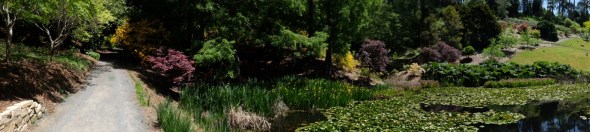
“I am sure most of you have already been to Mount Lofty Botanic Gardens numerous times, but there is always something new to shoot. Given the theme is “Straight from the camera” also known as SOOC (pronounced “Souq”), we have got a limitless range to shoot. From birds, flowers, trees, lakes, landscapes, to macro shots of insects.”
Here are the details:
Sunday, March 5th at 11:00 am,
270 C mostly sunny (bring suncream )
Meet at lower car park, 11 Lampert Rd, Crafers SA 5152
Linked to the “Straight from the camera” Competition on March 16th
Required pre-reading – Tariq has written an article with tips. Link to article
Mark Pedlar has been doing some work on the rules that will apply to the Straight from the Camera competition. So to get you up to speed, I’m going to reproduce what he’s sent.
Let’s start with that supposed evil – Photoshop – and Mark’s view on image processing today compared to the days of film.
Straight from the camera shall be the whole of the law or, is Photoshop for cheats?
At the age of 12 I bought my first camera, a Kodak Brownie 127 – black and white, processed by the chemist. Only three years later I spent all of my first pay packet on a 35mm Halina 35X and I was into colour photography.
For four decades and through a series of cameras the vast majority of my images, family records, fun shots, as well as entries in national and international salons, were colour slides. In all of this there was one constant. Once the shutter button was pushed my images were pretty well set in stone. Whether I waited for Kodak’s yellow box or Agfa’s blue one to appear in the mailbox, or whether I processed my own in the kitchen, from 100 foot rolls of Ektachrome, the image on the celluloid could not be altered. The exposure, contrast and sharpness were inviolable. Composition could be modified somewhat by masking portions of the slide with aluminium foil. However, this was obvious since the projected images were smaller than others in the salon. So, over these several decades more than 90% of competitive colour slides, worldwide, were “Straight from the camera”.
Of, course this did not in any way mean that everybody was operating on a level playing field. Those using a ‘top of the range’ Nikon with a battery of excellent lenses would be able to capture some images simply not available to my $50 East German Praktika: multiple exposures on one frame for example.
Today’s ‘top of range’ cameras similarly offer rafts of pre-exposure adjustments simply not available to the user of a basic ‘point and shoot’ camera. The playing field was never level. Further, the greatest unevenness always has been and will be the way in which the operator uses the human brain he or she puts up close to the viewfinder.
‘Straight from the camera’, then, has long been the accepted practice of slide producers. However, that’s not true of users of negative film and prints. Again decades ago I bought a whole darkroom from an ageing amateur/professional photographer from Brewarrina. I used it for monochrome exclusively. Colour printing was way outside my budget. However, printing from negatives was exciting for a range of reasons; not least of all the ability to modify (and hopefully improve) the image originally captured before it became a print.
So, I cropped the portion of the image I printed to change the composition and to remove distractions like lampposts or stray arms and legs. I held my hands between the enlarger lens and the paper making a circle of light between my fingers. By doing this during the exposure and moving my hands a bit to blur the edges I could allow extra light to a portion of the image. This meant I could ‘burn’ in details to what would otherwise have been a white area (clouds). I had a small circle of cardboard Sellotaped to the end of a piece of wire (once a coat hanger). By holding this between lens and paper (dodging) I restricted the light falling on a shadow portion of the image and allowed detail to appear in what would have otherwise have been totally black.
I chose whether I printed on matt, satin or glossy paper. I chose the paper grade to give me high, medium or low contrast. Later there was multigrade paper whose contrast was adjusted with filters. I chose exposure times to change the final result. I selected developers and their temperature to change contrast. I deleted most of the developed image before fixing using ferricyanide solution and redeveloped to convert the black and white image to sepia. My ancient photographer’s darkroom kit contained a huge range of arcane solutions including some of gold salts that enable black and white to be tinted blue.
All of the modifications described in the last two paragraphs were made after the shutter was released; after the camera had long ago been put away in its cupboard.
So, what are the take home messages? There are two.
First, excellent images can and have for ages been made without any post-exposure modifications. There really is no replacement for getting it right in the camera. However, even if we prohibit ‘post’ work like Photoshop competitive photography will still not be a level playing field.
Second, makers of prints from negatives have been modifying their images in the darkroom during the printing process for over a hundred years now. When did you last hear somebody suggest that this is unethical or underhanded or cheating? However, there is a body of opinion that makes just these sorts of suggestions about the use of software packages like Photoshop. Why? Not all users of editing software are out there winning competitions, exhibitions and salons. Software does not automatically give you great results without effort. Software is a tool and you need to learn how to use it just as was the case with darkroom techniques.
So, get your image as near perfect as you can in the camera. Then make judicious and competent use of whatever other tools are available to correct errors and finish the job.
Now for the rules (which I’ve also put into the calendar and programme)
Straight out of Camera Submission rules
During the submissions to the club’s subcommittee back in the Spring several members said they had concerns over the emphasis placed by judges on post exposure editing or manipulation of images.
Some were opposed to the concept of editing and others simply had no access to the software to edit images. There was a cry for more images to be presented “straight from the camera”, with no editing carried out after the shutter button had been pushed.
This competition’s set subject is a response to that request.
So here are the rules.
For prints, no alteration AT ALL may be made to the image after exposure and before printing.
Printed images must be presented full frame. No cropping is allowed. If the image shot is 4:3 format or 3:2 format it must be printed in that format.
Images must be printed from the file originally captured by the camera.
If you usually shoot in RAW you must be able to print from that RAW file. It may not be converted to JPEG TIFF or similar for printing. Or, shoot in a printable file format.
For those having files professionally printed, the file submitted to the printer must be printable without alteration.
Prints displayed as monochrome must have been captured in that form.
The general club rules about size of prints still apply.
Digital images are allowed one alteration only. This is to allow the projected image to conform with our projection limitations
The recorded image file may be reduced to maximum of 1400 x 1200 pixels. It must still be presented full frame.
All the other print rules apply to projected images.
Finally, I’ve taken one of the documents Mark sent me about photography & aperture and made it a permanent link in our Resources page
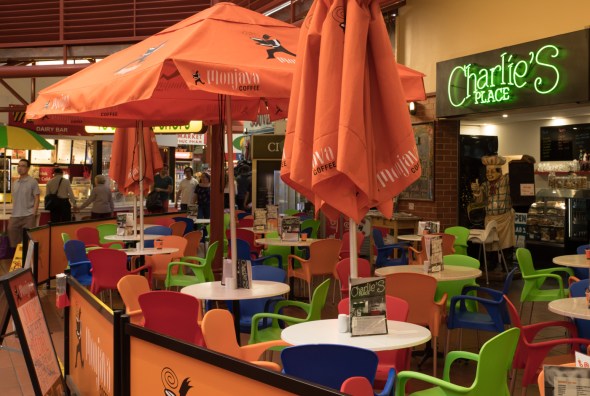
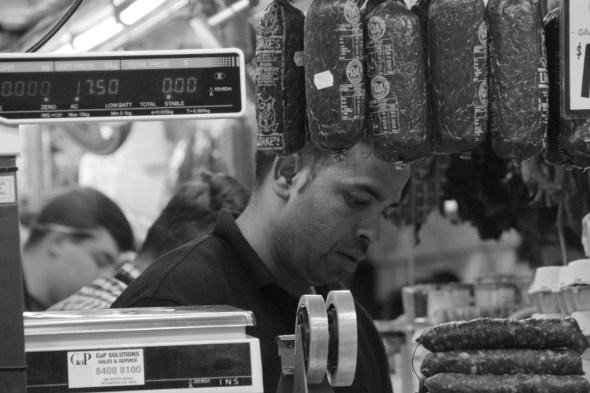
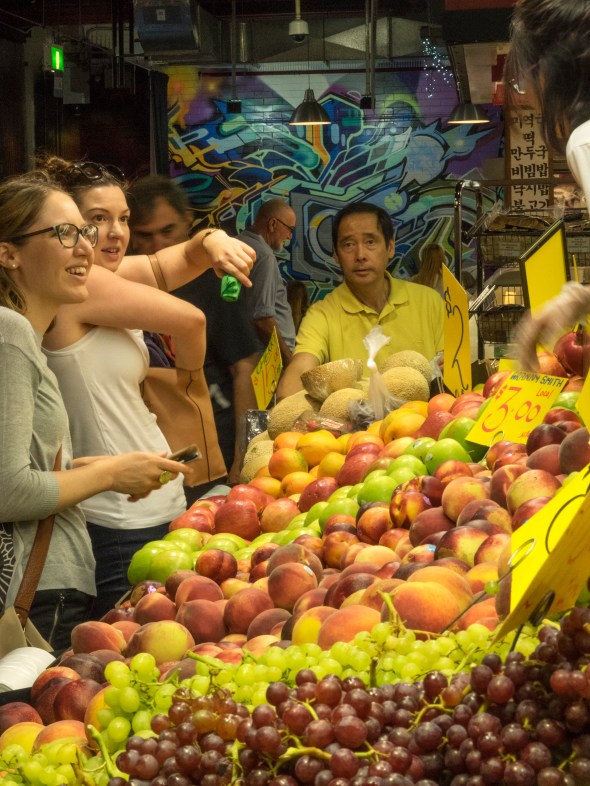
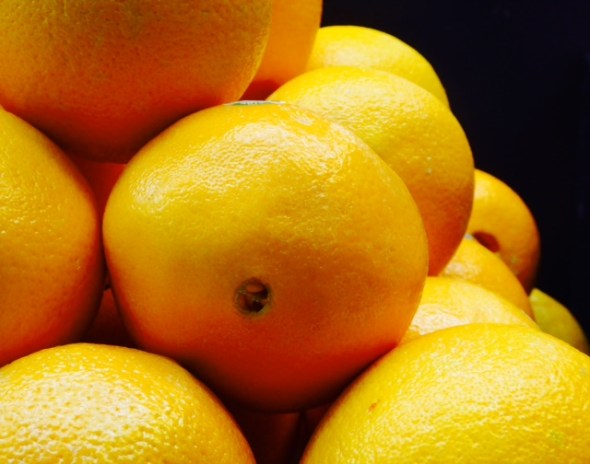
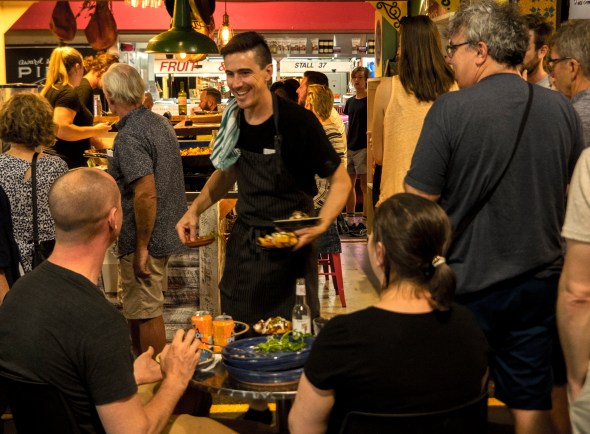
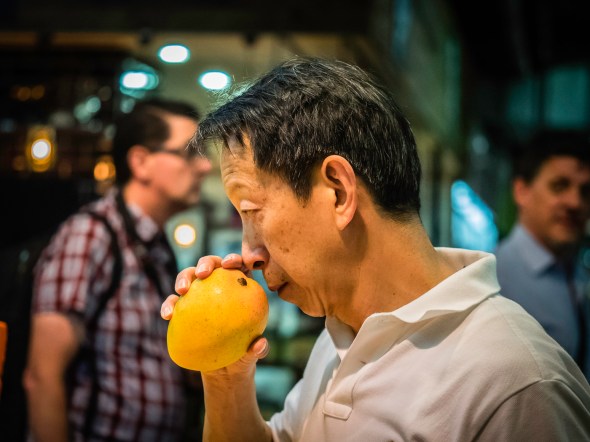
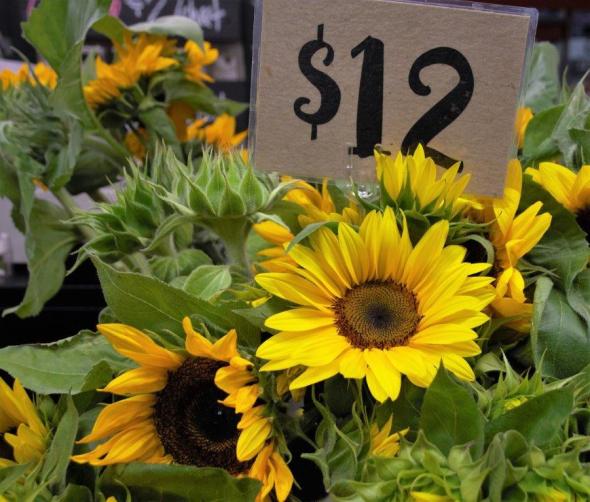
With the challenge of an upcoming competition entitled ’50 Shades Of Orange’, eighteen of us headed into the Adelaide Central Market on Friday January 20 to see what we could photograph, orange or otherwise.
Those who attended were provided, prior to the night, with two articles on how to photograph an indoor market, one by James Allan and another by Bruce Nankivell. Before entering the market those who needed technical assistance were helped out by willing participants including Mark Pedlar and our thanks goes to these members. In future we’ll be looking to provide this sort of assistance for every excursion and asking various members to help.
The Adelaide Central Market is always a busy place on a Friday night and even more so when the city is busy with the Tour Down Under (TDU). Some of our group even ventured to the TDU Village to broaden their night’s activities as you’ll see.
The lighting in an indoor market present a whole raft of challenges for a photographer. One of our participants made the following comment: “With my camera I was not able to take many photos of patrons at cafes due to the low lights and needed to adjust my ISO’s continually due to different lighting throughout the area. I am amazed at how many different ways ‘orange’ can be used from signs, clothes, food, lights, flowers, cars and many more. The challenge is to make them interesting.” From the images shown here I think we did a pretty good job, so nice work everyone and thanks for coming along.
Our next excursion will be to the Mt Lofty Botanic Gardens on Sunday March 5, which Tariq will give us all the details on when it gets closer.
I have finally put together the December Camera Clips. I have received contributions from most entrants in the end of year competition. It is good to read the story behind the photos. This is often the best work from the year for those who enter.
Also I have been given permission to publish the report from the sub-committee. This is a wide ranging review of the club and the opinions of its members. There has been a lot of work that has gone into this document and it is worth reading to see what the final conclusions have been.
Finally I have been working on a series of articles to try and answer (at least in my own mind) issues that were raised during the year.
Daniel Schultz is a young successful commercial photographer in Adelaide. He kindly gave up his evening on Thursday night to tell us a little of how he came to his career, what sort of work he does and how he has created some of his impressive images.
Dan began working in a cycle shop, a long way from photography. This expanded to working part time in both the cycle business and in a wheelchair manufacturing concern. Somewhere in here he and his partner had their first child. Obviously now there was a strong need for photographs. He started recording family history using a simple camera. However, several of his images piqued the interest of those who saw them. He was encouraged to pursue his art. Before he knew it he was on his way to commercial photography. An established photographer took him on in a part time capacity while he was still working in the wheelchair business. Then as his experience and client base grew he launched Sweet Lime Photo.
When asked what equipment he used he said he has two cameras, both Canon 5Ds, one Mark 3 and one Mark 4. These are teamed up with three Canon zoom lenses (16-24mm, 28-80mm, 70-200mm) and one Canon 100mm prime lens. His workflow is Lightroom for all the initial “post work” followed by Photoshop for final tweaking.
The aim was to promote a motorised wheel chair. This is the setting Dan used
The setting needed to show it could handle all terrain. So in the middle of summer, Dan needed to create a puddle – with 60 litres of water
The camera was set up with the product – fixed location – tethered to the laptop for each shot
Checking the images on the laptop
Checking the lighting
The final set up
Adding adjustment layers to the images – there are lots of them – the sky, the path, the chair details, star burst on the light…..
Driving the wheelchair to make a puddle would be difficult – so make your own splash by throwing rocks
And now add in the splash and blur the wheel for motion
The final shot with all adjustment layers, panoramic background (there we many shots stitched to make that), the sky (clouds from another shot) – as it appears on the product site.
The image sequence above highlights Dan’s workflow for a product shoot for a motorised wheelchair. Click on the images to see full captions
Dan makes heavy use of the layers capabilities of both software packages. Final images commonly make use of anything up to 60 layers. He illustrated his process by taking us through the creation of an advertising image for a new motorised wheelchair. The background was a panorama of multiple vertical images stitched together. Each of these was the HDR result of combining several exposures of the same shot. This panorama overlaid with a shot of the wheelchair and rider was then worked on using layers to dodge and burn various small portions of the image to enhance shadow and highlight detail and to introduce water splash and reflections.
Not only was Dan’s talk enlightening and instructive it was fascinating and a good night out. We are indebted to Dan for the very open way in which he took us into many of his secrets. I now need to settle down and practice what I saw.
Yep – the BPC 2017 Calendar is on it’s way. We’ve prodded and cajoled the club members into giving us their images, slaved over a hot computer, fiddled with bleeds and cropping, been through 8 drafts, sent it to the printer for proofs and produced this
……well almost. The colours aren’t quite right (ffmeg and I are not getting on at the moment).
This is our major fundraiser for the year that helps pay the bills, buy new equipment, fund guest speakers etc. For a mere $15 you get 13 months (yes 13!) of calendar. Drop us a line if you want one, want to share with friends here or overseas.
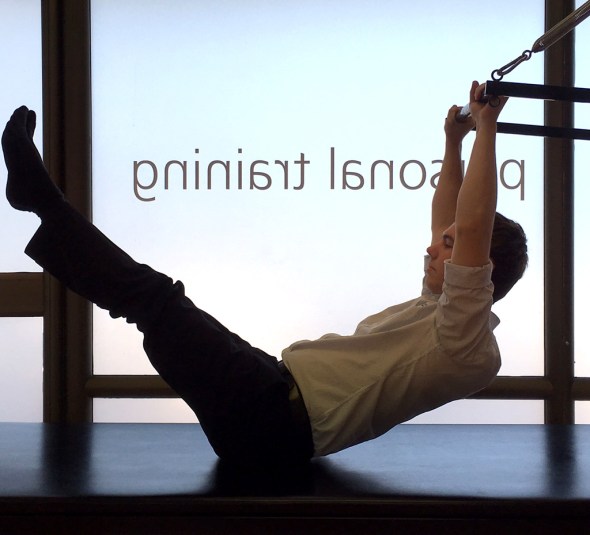
‘Sports’ was our subject and according to the Oxford Dictionary sport is ‘an activity involving physical exertion and skill in which an individual or team competes against another or others for entertainment.’ In Stephanie’s example above we have an individual who looks like he’s sneaking in a bit of personal training during lunch break. I believe this is Stephanie’s first entry, which was in the Novice category and it scored a perfect ten….congratulations Steph!
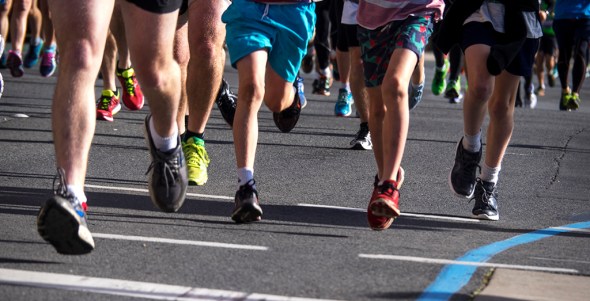
As with all of our previous competitions, an excursion was arranged prior to competition night to provide an opportunity for members to create entries for the subject. The excursion this time was to the City To Bay Fun Run and pleasingly there were some entries as a result.
Bruce Nankivell – City Bay One foot after the Other
Our judge for the evening was Benjamin Kerr who is relatively new to the world of judging and it has to be said he definitely impressed as reflected with considerable positive feedback. For me it was enlightening to have a judge who looked upon each photograph for what it was and judged it as such rather than judge it perhaps less highly because he didn’t quite understand the image.
Benjamin states: ‘Photography for me is about validation and connection – giving the viewer something that they might desire or simply identify with and to provide a perspective that gives you an opportunity to think and contemplate.
Having recently graduated with my Diploma in Photo Imaging (June 2016) I must be honest and say that I am yet to find myself as an Artist with a definitive and recognisable personal style.
I enjoy what I do and yes I intentionally flit around and experiment between Commercial Work, Portraiture, Weddings and Formals, Landscape, Abstract, Macro, Astro, Architecture and a whole suite of other categories.’
This range of interests in his photography came through in his judging with a wide understanding of what is required to make it all work in the different scenarios.
You can check out some of Benjamin’s work and find out more about him at: http://www.snapshotdigitalimagery.com/Pages/home
Just grabbing some of his feedback for a moment:
‘Need to be sure the focus of the image is in a dominant position ‘eg not too far to one side of the image’. The word balance comes to mind.
Many shots impressed with their clever inclusion of ‘leading lines’.
He enjoyed the strong contrasts in many images
Ben showed understanding and appreciation for photos that are difficult to take due to light conditions, reflections, shadows etc.
A comment we’ve heard from other judges again raised it’s head: ‘Be mindful of what is in the background and if it’s a person and it’s going to be distracting, wait until they have moved out of the frame’.
Be careful of empty space
‘Everything you need to know is in the picture’
He enjoyed the play of the intentional slow shutter speed in some cases which created a mix of sharp and blurred
With sports images ‘slower shutter speed gives an increased sense of movement’
Thanks Benjamin for a job well done.
James Allan – A Sea Cave
Bruce Nankivell – Pedal Prix Power
James Allan – Hoping for Recovery
Jennifer Williams – The Snowboarder
Helen Whitford – How to Impress your Mates
Our Open Category once again resulted in plenty of stunning and high scoring images:
Helen Whitford – Elephish
Chris Schultz – Portal
Chris Schultz – Dome
Tariq Mohammad Abdul – Solitude
Jennifer Williams – Back to the Future
James Allan – Steel Wool
Alberto Giurelli – Galaxy
Alberto Giurelli – The Boxer
Chris Schultz – Smoking Violin
Chris Schultz – Street Meet
Alberto Giurelli – Ghost Tree
Steve Walace – Pacific Gull
Helen Whitford – On yer Bike!
Jennifer Williams – Hotham
Jennifer Williams – Tiahn
Chris Schultz – Liquification
Chris Schultz – Che and Me
This was our last competition for 2016 and we hope you’ve enjoyed all of them. Our thanks go to all the judges who’ve helped us through the year and to those who’ve done all the organising behind the scenes for our competitions, something that should never be taken for granted.
Now we can look forward to finding out what the best photos of the year are via our 2016 Annual Exhibition Awards Night on Thursday November 17.
This is an early edition of Camera clips. Fortunately I have been given enough material to post early this month. Camera Clips in my mind is a club magazine because it reflects the knowledge and views of our club members. If you have a point of view, a beef, write to me and I will publish your experiences and ideas. We accept that there is diversity of experience and we aim not to have an editorial bias.
People At Work was our subject for August which had the following definition: One or more people conducting their normal daily occupation must be the significant focus of these images.
For this night, our judge co-ordinator, Alberto Giurelli, stepped “outside the bubble”. Instead of an SAPF judge we were privileged to have an interesting new perspective on critiquing club member images via professional photographer, Peter Barnes.
Peter is a commercial photographer based in Adelaide and specialises in architectural, industrial and landscape photography. In amongst his accolades, in 2015 he was awarded Master of Photography by the Australian Institute of Professional Photography (AIPP). A host of awards are his, including Commercial Photographer of the Year in 2011 and 2013 and Travel Photographer of the Year in 2012 and 2013. He is also, by the way, a judge of the annual SAPF Annual Exhibition. He states that “My photography celebrates the things we build…” and I have to say much more too. If you want to check out some more of his work besides the images immediately below try http://www.fotografo.com.au
.
I was trying to pick up on the key messages coming from Peter and he had plenty of positive feedback for many images eg:
Original
Good composition
Good light
Sharp
Excellent colour
Good expression
“I got a strong connection with this….”
“I feel the power of water in this”
“..lots of energy and passion in the subject.”
“good contrast of colours”
“..the simple focus of this image works”
Peter also had provided suggestions on how to improve:
Faces need to be clear and well lit.
Sharpness is critical as is appropriate use of depth of field.
Look for any distractions in an image eg. any unnecessary lines across the image or things that don’t add to the image.
It is important not to over photo-shop eg. a building was “too green” and another image “over sharpened”.
Balance the foreground with the background.
Try not to leave the viewer trying to guess what the message of the image is, such that they don’t have to assume too much.
Always ensure the horizon is straight.
Look after the detail eg: “Need more control of the whites in the clouds”.
Check the background when photographing and when preparing an image for judging, check it again and if necessary crop.
The composition should ideally “jump out” at the viewer.
For me the main repeated messages I got related to the need for greater sharpness and to ensure faces are clear and well lit.
With all this said we once again had plenty of pretty special images to peruse and it should be noted that the points allocated were lower than we are familiar with using SAPF judges.
The highest scores among the 27 entries we had for the Set Subject category (People at Work), were 8’s. These were awarded to:
Jenny Pedlar for Moving The Herd
Alberto Giurelli for Gondoliers
James Allan for Worker
Train Driver – James Allan
In the Open category we had 40 entries and from these we had two that scored 9 points:
Alberto Giurelli for Remarkable Rocks
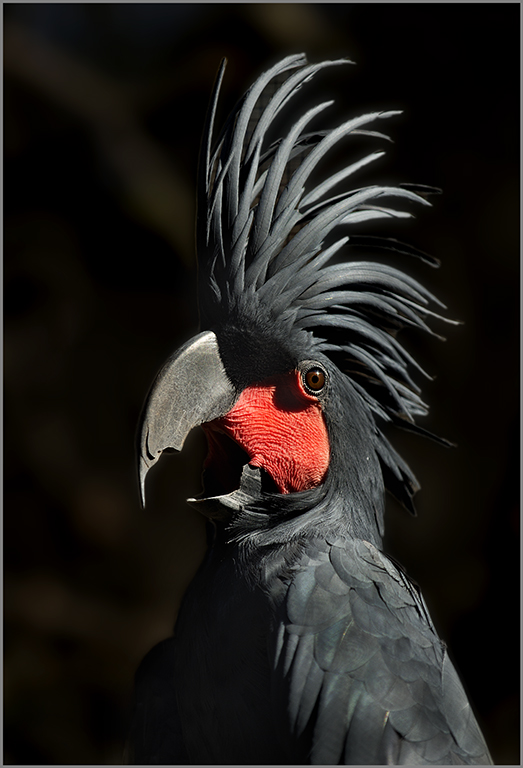
Alberto Giurelli for Palm Cockatoo
There were 11 entries that scored 8 points:
James Allan for Album 48
James Allan for Album 46
Eric Budworth for A Good Match
Grant Coles for Looking Up
Helen Fletcher for The-Bride
James Allan for Laminar Flow
Alberto Giurelli for Dream Flower
Ron Hassan for Can I Help You
Alberto Giurelli for Tranquility
James Allan for Jonquils
James Allan for Caged
Palm Cockatoo – Alberto Giurelli
Jonquils – James Allan
Caged – James Allan
Can I Help You? – Ron Hassan
Looking forward now to our next competition night on Thursday October 6, with the subject ‘Sport’. But before this we have an excursion on Sunday August 18 to Victoria Square in the city to photograph the City to Bay Fun Run. There is a separate detailed note coming out shortly on this via our President Chris Schultz.
I have just published the August Camera Clips. The banner this month comes from Ron Hassan, “A lovely time of day”. This was an open entry from the August (people at work) photo competition. I suspect it is an image from his recent trip to North America. I have also collected articles from Helen Whitford (Tips on zoo photography) and Eric Budworth (Digicam control – free software that will run your camera) as well as myself (Focus stacking using digicam control, Phone Apps for photographers and Art Photography – quotes from the art photographers). Lastly I have compiled a photo essay of images from the successful zoo excursion.
It has been a busy month in the club so have a look at what we have been up to. I hope you enjoy this edition.
An interesting subject for our July competition and one that resulted in some clever and creative images. On top of this we were yet again left highly impressed with the range of photos presented in the Open Category.
To work one by one through the 75 images from 17 members (that is a 25% participation rate, our target is 33%) we were fortunate to have the well-recognised and highly valued critique of judge, Keith Siedel. The ‘Judge Co-ordinator’ for the SAPF, Keith is also a member of the Edwardstown Photography Club and has over 30 years of photo club experience. It all began for him with a Pentax Spotmatic at the age of 13 years. For him the two key ingredients to photography are:
First and foremost, ENJOY what you are doing;
Photograph things that excite you. Photographing what excites others is just a bonus.
Some of the tips I picked up as he took us on a journey that evening included in no particular order:
Too many bright spots in an image “deflect focus”.
Tone back any brightness in the background.
Birds ideally are photographed in total relief eg. for a bird its outline needs to be free of any obstruction such as tree branches across the tip of a wing or similar.
For furry animals the sharpness of the nose, whiskers and eyes is the most critical thing.
For flowers it is preferable to concentrate on one flower and get that right, then concentrate on the remainder.
The most difficult part of double portraits is to get the lighting comfortable/balanced.
For animals the eyes are most important as they tell a story then it’s the details all over the head such as fur and highlights.
Sometimes consider changing an image from landscape to portrait as it could remove distracting backgrounds in some cases.
Children – getting all of the face is important eg. don’t want the face cut off at say below the lower lip such that you can’t see the chin.
Children – sometimes a vignette can help create greater focus for the viewer.
Give space around the subject eg. if it is a leaf, space around it will add to the image.
Among the hardest photos to take are of babies.
Black and white needs strong contrast.
Strong character faces needs strong focus on the face so that distractions are very much in the background.
A good portrait tells something of the character of the person.
When considering an image and how to present it, it is sometimes valuable to just look for the strongest section of the image for use.
If you find value in just one of the above tips then I’m glad I put them in. Photography is certainly a step by step process.
Now let’s have a look at the images presented on the night beginning with the set subject of ‘Worms Eye View’:
Steve Wallace – Lamella Close Up
Robyn Due – Rough Day
Steve Wallace – Giant’s Tracery
Steve Wallace – Soaring Red Hot Pokers
Heather Connelly – Totally Lost Worm
The following are from the Open Category:
Adrian Hill – Hallett Cove Beach Railway Station at Dusk
Ashley Hoff – The Technique is in the Tongue
Theo Prucha – Surfer
Ursula Prucha – Hello
Looking forward now to our next competition night on Thursday August 25, with the subject ‘People At Work’. But before this we have an excursion on Sunday August 7 to Victor Harbor / Pt Elliott, so expect to hear more soon from James Allan who is putting this one together for us. I believe he’s ordered a sunny day with a bit of cloud 🙂
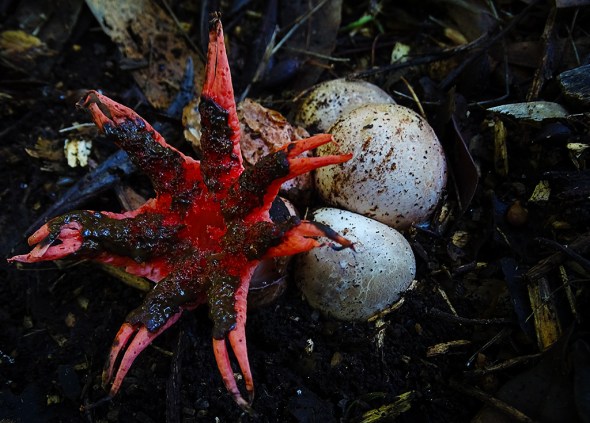
I have just added a photo essay about the Botanical Gardens Excursion. This proved to be a fungus finding expedition, thanks to help from my daughter Charlotte. Perhaps the perfect anecdote to a troubled election. You can find this article in the June Newsletter. Regards James
While the recent Photo Journalism competition was a great night, it was unfortunate that only 18 members from a possible 69 (26%) joined in. This has prompted club President, Chris Schultz to call for all of us to take a more active part and has set us a participation rate target of 33% as a starting point. While we had 77 photos to show, 50% of these came from just 5 members. Without these members it would have been a relatively poor showing and an early night.
With the style of judging consistently provided in a positive mode, we all have every reason to put photos up. There is much to be learned, even if we don’t always agree with the score or comments. When it’s your photo being critiqued you most definitely take greater notice of what is being said and this can only lead to improvements in your photography. From my own experience I’ve found everyone to be extremely positive, supportive and encouraging even when I’ve put up photos that I would now look at and cringe…..that’s learning. So let’s make this 33% target a reality.
With that said and my fingers crossed that you will all participate (just one image will do) let’s have a look at the successful night the Photo Journalism competition was. We have plenty of enthusiastic support from members attending and this night was no exception.
We were privileged to have as our Judge David Smith of the Eastern Suburbs Photographic Club. David is a highly qualified photographer and provides a well-balanced and considered approach to his judging and always has plenty of positive suggestions. I really enjoyed that he verbalises his thinking as he assesses each image. This is valuable for everyone and as mentioned earlier, particularly for the photographer.
At the top end ten images were given a full score, a further fourteen scored nine and fifteen scored eight. That’s an impressive 56% scoring highly and reflects well on the skills of the club.
In the Photo Journalism categories there were a total of 6 images that scored 10/10.
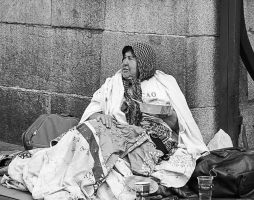
Sam Savage showed us with an excellent mono image what it looks like to live on the streets in Spain and provided us with a view of a somewhat darker side of life.
Sam Savage – Home Street Home
Helen Fletcher provided a stunning and colourful portrait within a street scene in Vietnam, entitled ‘Bac-Ha Woman’.
Mark Pedlar’s ‘Graduation’ image was one of strong colour contrast set in a mood of graduate celebration.
James Allan’s ‘Is It True’ captured beautifully the Anzac Centenary Memorial Walk as an ex-serviceman gently touches it to ensure it is indeed true
James Allan – Is it True?
Mark Pedlar – Graduation
A bright red Ford Thunderbird, photographed by Ashley Hoff, shone brightly in the early evening light as a part of the Tanunda Cruise (hot rod) event.
The final full points photo of the category was from Alberto Giurelli, entitled ‘International Horse Trials’ and portrayed a horse receiving some close veterinary attention.
Ashley Hoff – A good turnout for the Tanunda Cruise
Alberto Giurelli – International Horse Trials
In the Open Categories the winners started with Theo Prucha’s beautiful image ‘Abandoned Farmhouse’ in the Album Prints Category. This was followed by James Allan’s ‘Corella’s Play’ in the Colour Prints and Alberto Giurelli’s stunning mono image ‘The Violinist’. Finally Ashley Hoff presented ‘The Bass Player’ in the Projected Image section.
Theo Prucha – Abandoned Farmhouse
James Allan – Corella Play
Ashely Hoff – The Bass Player
Of course credit goes to everyone who put their excellent photos up on the night; every one of them would have gained some benefit from doing so.
Our next competition is entitled ‘Worms Eye View’ on Thursday July 15, but before then we have an excursion on Sunday July 3 at the Botanical Gardens where the goal will be to capture images for this upcoming competition.
Finally, let’s all aim to put at least one image in and make sure we hit the 33% participation target or better.
I am proud to announce that we have just produced the April 2016 edition of Camera Clips. This edition features articles that reflect recent workshops and review nights.
Alberto and I have put together some of the information about High Key images from the workshop of the same name. There is an article on “The Decisive Moment” a book by Henri Cartier-Bresson after a discussion on street photography. There is a photo-essay of the Anzac day dawn service attended by some of the club members. Bruce Nankivell has provided a photoessay on an Iconic Hills Garden. And several other articles.
I hope that you will enjoy this edition of Camera Clips – the club newsletter.




 )
)
















 For him the two key ingredients to photography are:








 Blackwood Photographic Club of South Australia Inc.